Gamagoramon
Gamagoramon is a pokémon-like game focused on combat. Players engage in battles until they have no living monsters left on their team. The goal is to rack up as many wins as possible.
Context
Gamagoramon was created as part of the programming courses at Gamagora. The goal was to demonstrate our programming skills by developing a game in C# using Unity, working in teams of two, over a period of up to one month.
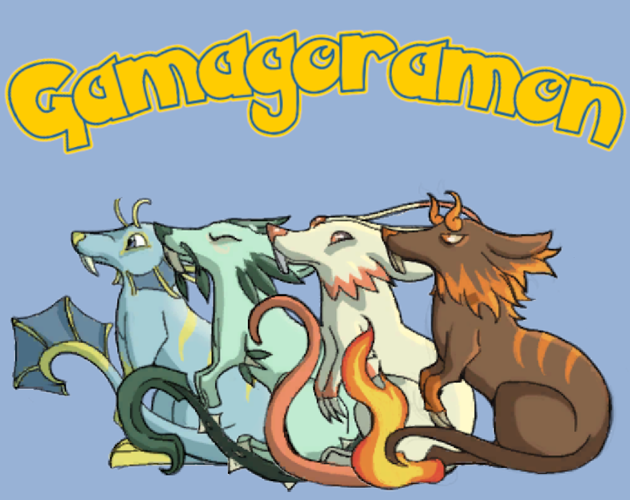
It is a fusion of Gamagora and Pokémon, hence the name Gamagoramon, and the Eeveelutions have become different types of rats.
How to play ?
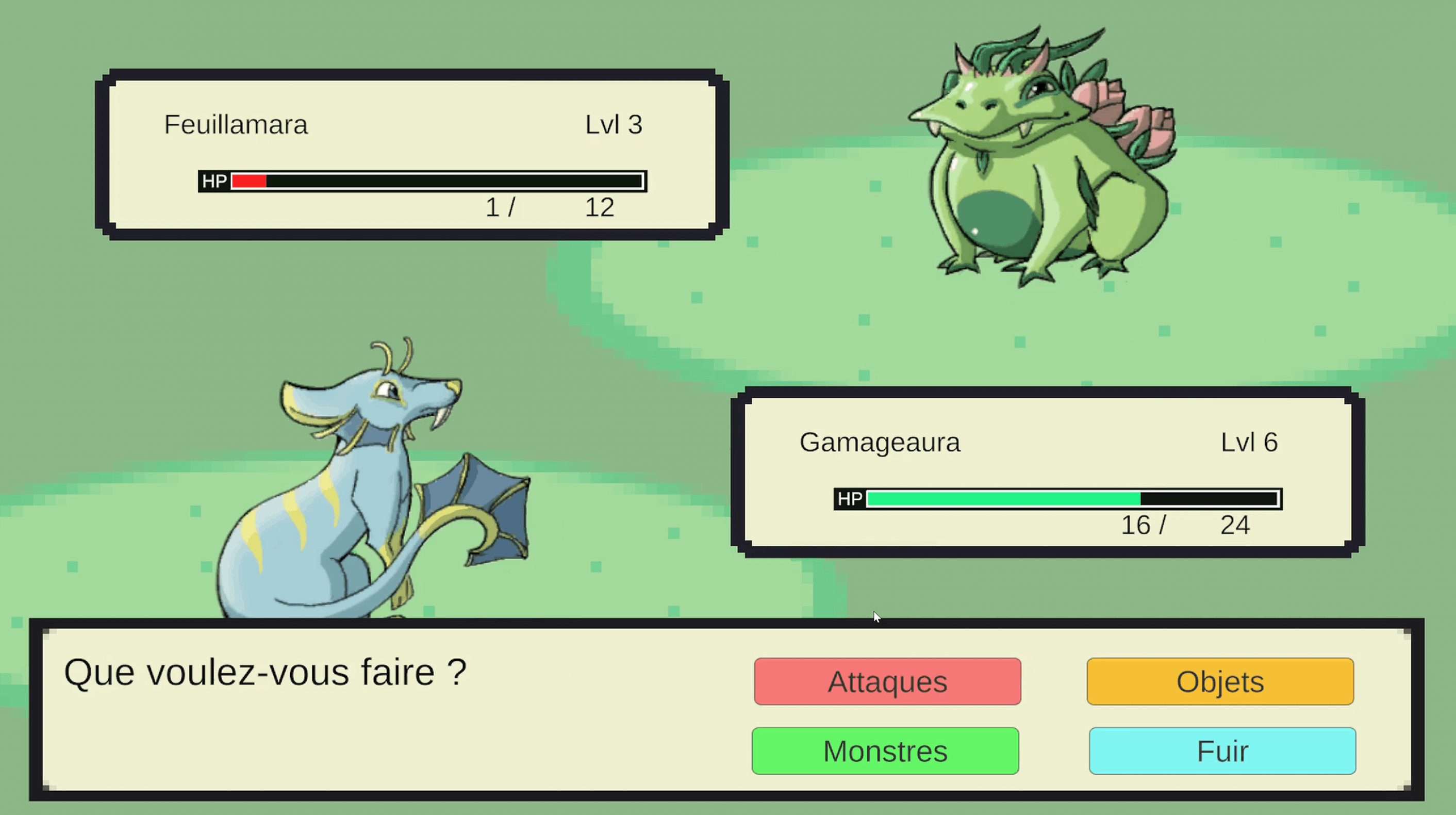
Similar to battles in Pokémon games, players face off against other trainers using turn-based attacks.
The player starts with a team of 3 monsters randomly selected from a pool of 12 monsters (3 per type). Each trainer has a random team, so even if you face the same trainer, they won’t necessarily have the same team, offering greater replay value.
We chose to keep the main types: Water, Fire, Grass, and Normal. Each type has its strengths and weaknesses, similar to rock, paper, scissors, with the exception of the Normal type, which compensates by having a reduced number of skills.
Each monster has a basic attack, a slightly more powerful attack, and a special attack with effects such as damage protection or healing.
For every battle the player wins, the active monster gains an additional level. The player must then use tactics to balance the levels of his monsters.
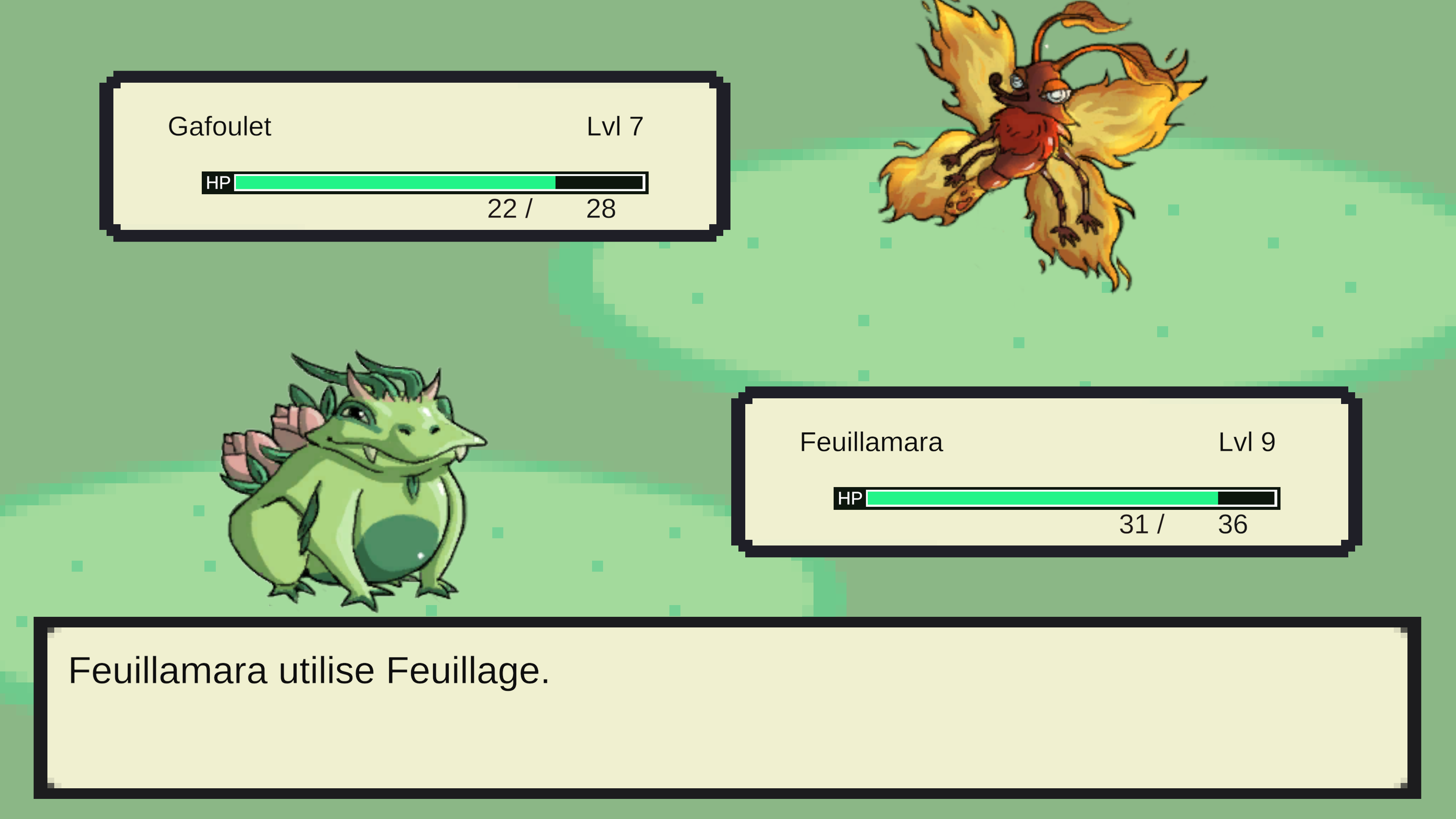
For each new trainer, the level of his monsters is calculated based on the level of the player's monsters, so the difficulty increases gradually. While the first few battles may be very easy, the ones that follow are much more challenging.
The game also features a system that allows you to swap monsters, choosing a different one from your team at the cost of a turn. A special ability has been added that lets you swap monsters without using a turn.
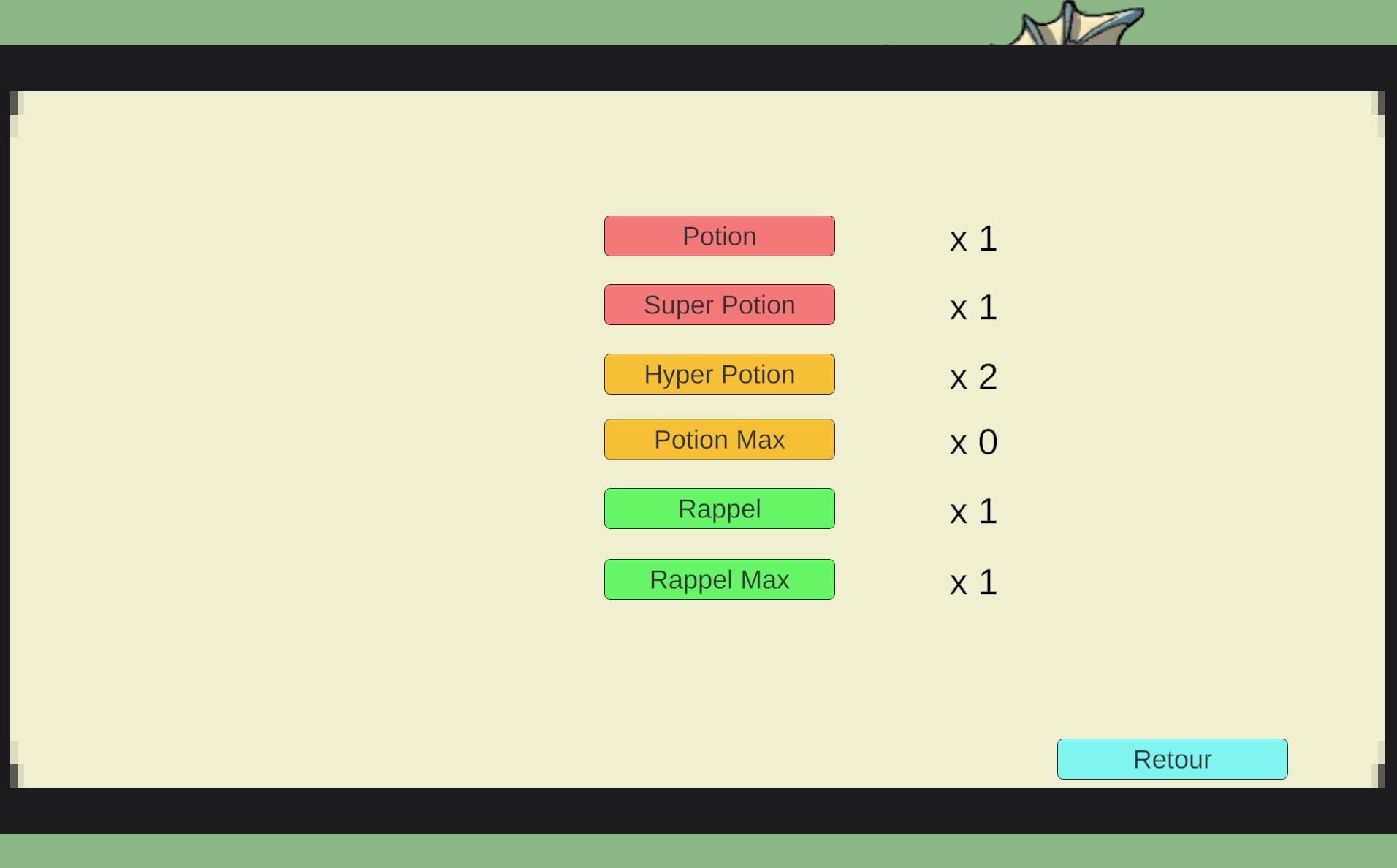
An inventory with various healing items has also been implemented. It allows the player to heal or even revive his monsters. Each item has a different healing effect. For instance, a Hyper Potion heals more than a regular Potion, and a Revive item can revive a knocked-out monster but is ineffective if the monster still has health points remaining.
Each item in the inventory is also randomly assigned at the start of each game. Thus, the player can have up to 3 items of each type. Depending on their luck, they might have 3 Max Revives, or have 0.
Finally, a scoring system allows players to see their maximum number of wins.
Role
I was primarily responsible for the game’s front-end. This involved implementing everything the player sees on screen and can interact with.
This includes the UI, notably the health bar, which changes color based on remaining health points, as well as the overall functionality of mechanics such as the inventory and monster switching, thanks to the backend data coded by my teammate.
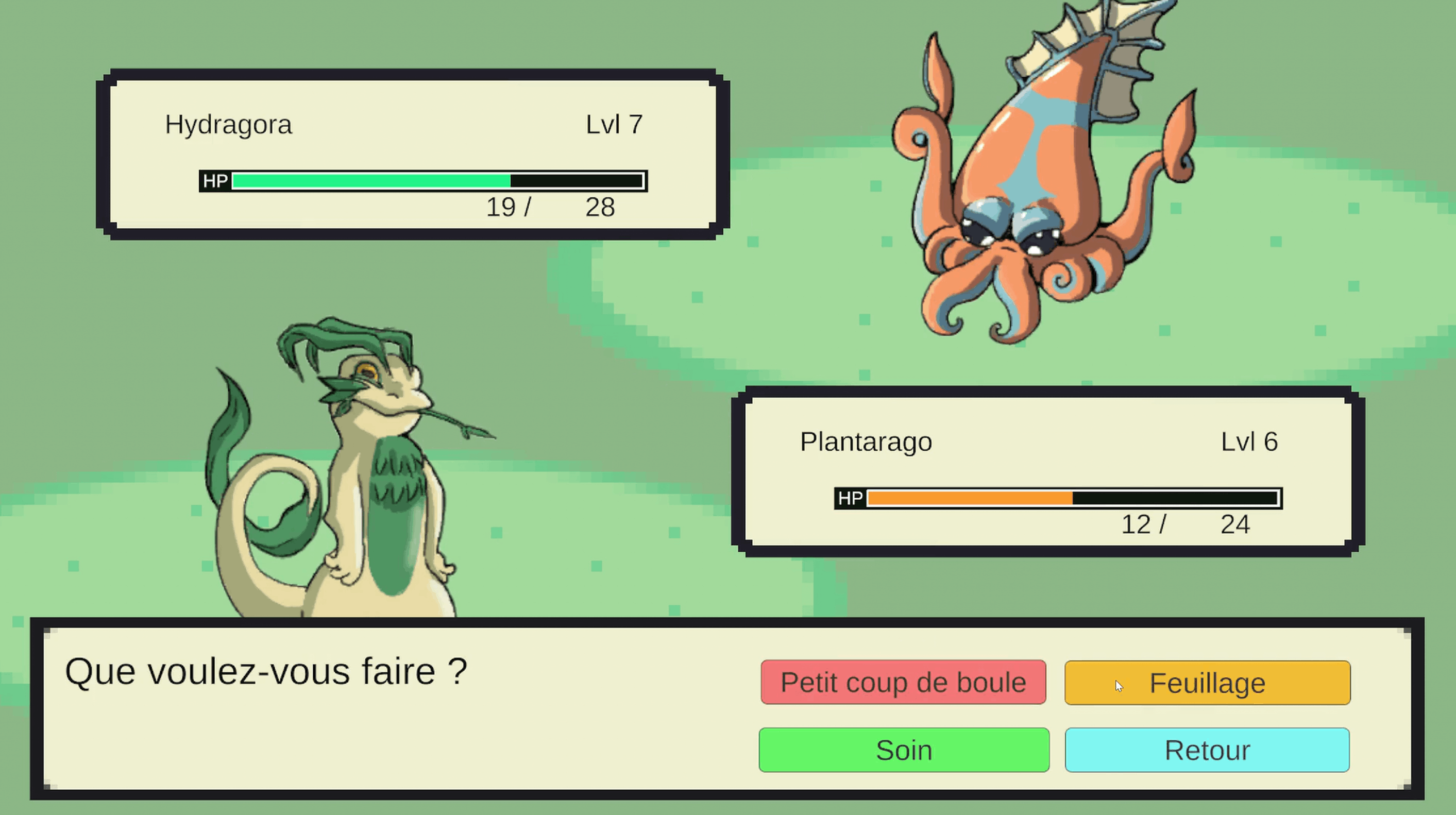
To make the game more dynamic, I also added simple animations when a monster is knocked out, when a trainer appears, and so on.
I also decided to include a scoring system to add a replay value and motivate players to achieve the highest score possible. Since the score is saved on the player’s device, he can retrieve it even if he closes the game.
Gamagoramon is the first game I’ve coded in C#, as I initially found Unreal easier to work with thanks to visual scripting.
However, I already had some experience with Unity, and this project made me even more eager to explore this engine and its possibilities.
What about the graphical part?
The drawings of the trainers and the monsters were made by a student in Gamagora’s 3D Computer Graphics program. I thought it would be a good idea to involve other programs in this project, since there are too few cross-program projects outside of Gamagora Game Show.
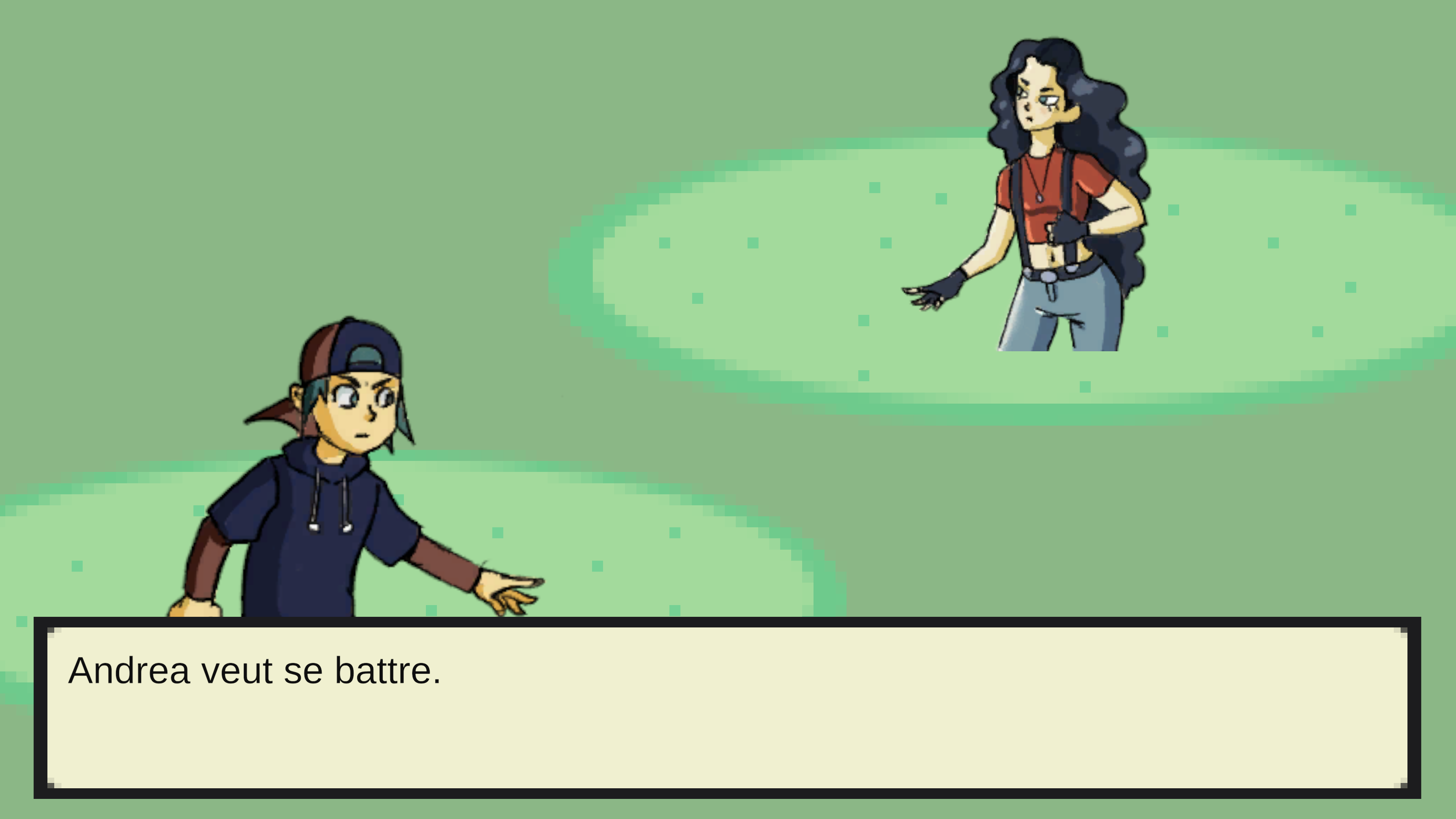
Having been impressed by her work on Deadly Dressed, I thought she would be the right person for the job and would help our project stand out from the other projects.
Feedback
Although there is still room for improvement, the feedback from the playtests has been overwhelmingly positive.
The game generated so much interest that we were able to have it tested at the Game Jam Party, a Lyon-based event usually dedicated to Game Jam games.
This opportunity allowed us to have the game tested outside of a school setting in order to attract a wider audience and realize that it perfectly aligns with the values I want to convey through the creation of social bonds using a “clone” of a game that has left its mark on generations: Pokémon.